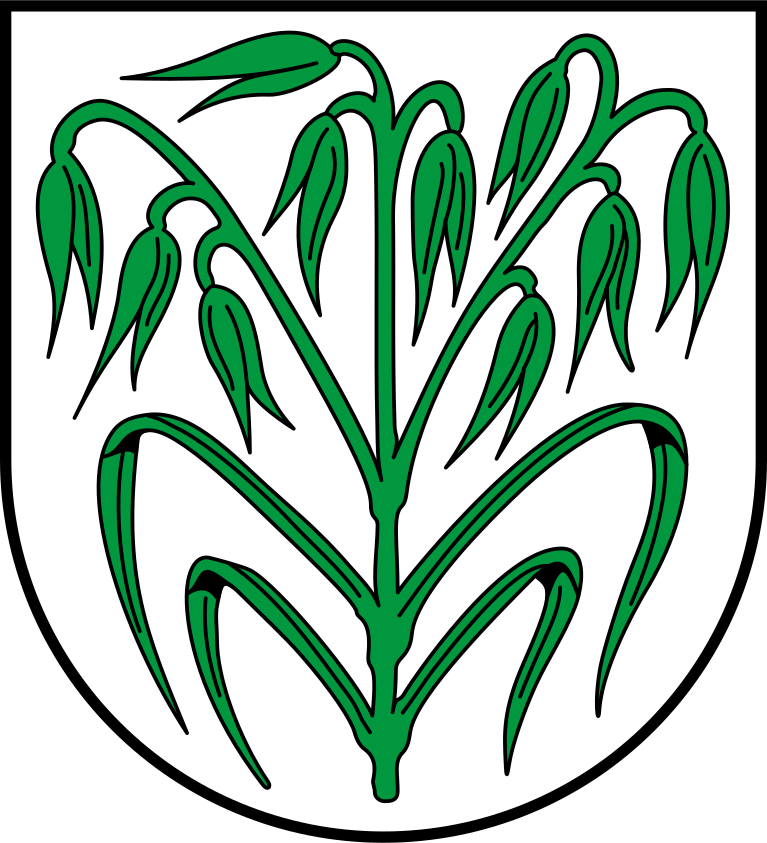
Family history research in Württemberg. Two village family books I compiled from the church registers myself, two more from the papers of Ruth Blank, which were never published. And because I was missing tools when working with webtrees, I wrote them.
All books are kept in one common collection at ofb.bgg-home.de: every entry in the wording of the source, next to it the persons and families derived from it, plus indexes, statistics and a hint form at every entry. All four books are also published as online family books with the Verein für Computergenealogie. The collection also holds books by other authors for which I prepared the online edition.


Two further village family books of the parish of Winterbach I keep up to date: Rohrbronn and Hebsack, corrections and additions from supplements and hints by other researchers. In addition two booklets on local history (German): Winterbach and Heuchelberg–Zabergäu.
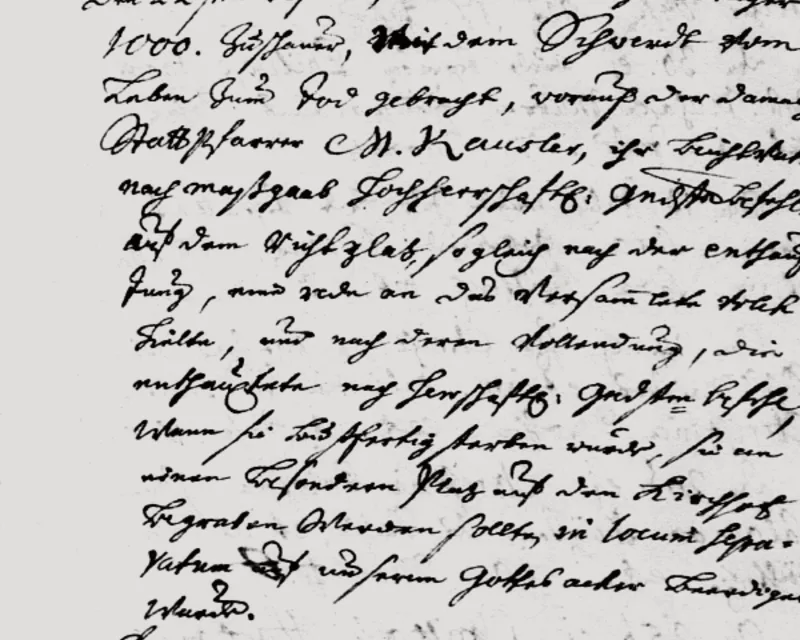
Over decades Dr. Otfried Kies typed baptism, marriage, burial and testament entries as running text. They are now searchable as single records, with filters by parish and register type: kies.bgg-home.de.
From this material an article for the journal of the Zabergäuverein has emerged, Aus den Kirchenbüchern des Zabergäus, accepted, to appear in one of the next issues.
The Haberschlacht church registers I read on a tablet, wrote out hard passages next to them and transferred everything into a genealogy database. With the large collections the work starts from a finished text: splitting the free text so that child, parents and godparents land in separate fields, reconciling name and occupation forms, correcting parish by parish by hand, building valid GEDCOM files from it.
Language models transfer handwritten sheets into a first reading version and split free text into fields. Everything else is done by scripts that run without a language model and return the same result for the same input. Checking is done by hand: next to every reading version stands the scan, uncertain passages carry a question mark, and for every record the raw text remains visible. How the books are built and how readers’ hints are taken in is described in the collection under About the collection.
webtrees is an open-source web application for family history. What I was missing in my own work, a proper program on the desk, an app for the family, a check for other people’s files, I wrote. Everything is GPL-3.0 with open source code; none of it touches the webtrees core.


All modules are listed in the module directory on webtrees.net.
The village family books are licensed under CC BY-SA 4.0, the programs and modules under GPL-3.0. The databases run on my own machines, the data is kept in open formats. Only sources from the 16th to 19th century are processed by machine, no data of living persons.